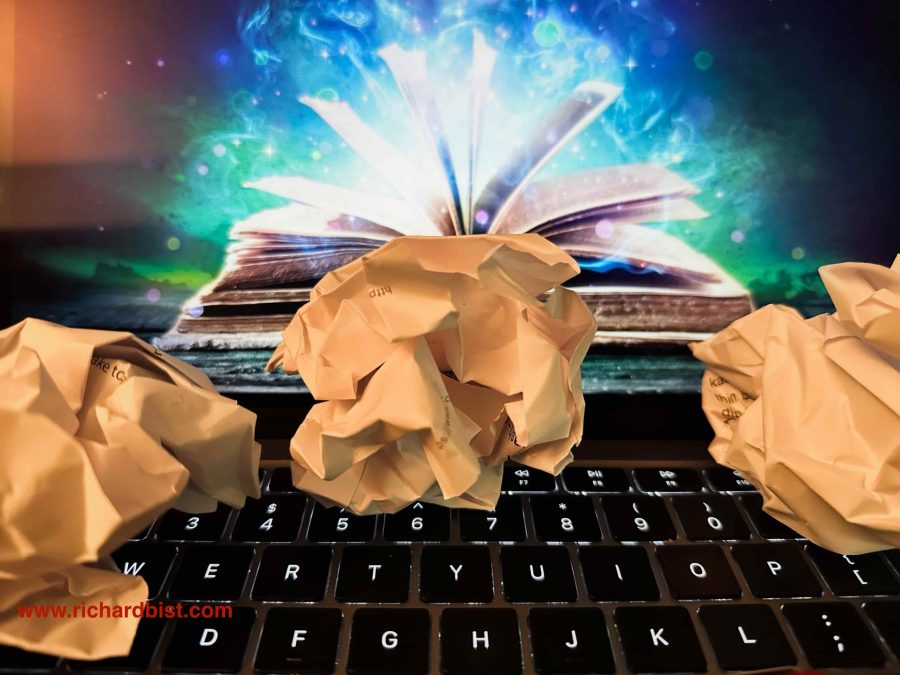
We’ve all read bad books. Novels that we either struggled to finish or gave up on mid-way through. It’s part of the reading experience. Working as a book reviewer in 2024, I experienced my fair share of the bad ones, but even then, I found ways to put that bad fiction to good use.
I won’t call out any offenders, of course. That would be impolite. But I think most people have a few books or stories that come to mind when the topic of bad writing comes up. Some may regret the money spent buying the book, or the time wasted reading it, and most of us wonder how it was published in the first place. You would think that somewhere along the line an editor, a beta reader, or at least a friend or family member would host an intervention.
Still, bad fiction can be a good thing.
As a writer, I feel that I’m always trying to hone my craft. There’s always something new to learn, something new to try, and bad fiction can be just as helpful as a well-written novel in my continuing education. What I’ve found is that when I’m struggling to read a book, I switch from being just a reader to being a student. I start asking questions. Why am I having a hard time with this? What is it about the writing or the story that’s not connecting with me? What would I have done differently in telling this story?
By doing this I find that I don’t feel so put out by the end of the story. Instead of feeling I’ve wasted time, I feel I put it to good use by analyzing the narrative, the plot, and the characterization and picking it apart to learn what works and what doesn’t.
And really, even in the worst story, I can find little gems hidden in the rough. There’s usually a handful of well-written lines, a brief bit of description, or a quip or two that stand out. Not all bad stories are completely bad.
The next time you find yourself mired down in a badly written book, simply change your point of view and instead see what you can learn from it. Not all stories can be best-sellers, but not all reading has to be wasted time.
RB
Excellent advice Richard, now if only I could find time to read something!
Here’s hoping you get a little bit of free time for yourself, Sheree!
Hoping and praying Richard
Hi. A really well-thought-out essay. I have less patience than you, though. If I don’t like a book too much after 30 to 40 pages, I stop reading it.
Oh, I get it, my friend. There have been one or two that I just couldn’t finish.
I’ve never thought of bad fiction as a possible teaching tool before. I always want to put it away. Thanks for that insight, Richard.
Thank you.
The reason why I am pretty decisive, is not because I do what I do want. But because I don’t want.
Not sure if I should give any examples, but there are a few authors I gave more than three chances because the subject matter was interesting to me.
The writing however, felt very mediocre. And some of the sub subjects matters weren’t for me.
Because of doing this, I now know where to spend my time on and where not.
It’s always good to know what you like before going into it, but at least you give three chances to win you over!
I’ve been a teacher longer than I’ve been anything in my life. It’s encouraging to think that my fiction is a teacher too. Thanks for that insight.
I appreciate the kindness, Devonne.
Interesting observation to study what you can learn from bad writing. Thanks, Richard.
Just trying to make the best of bad situations, Pat.