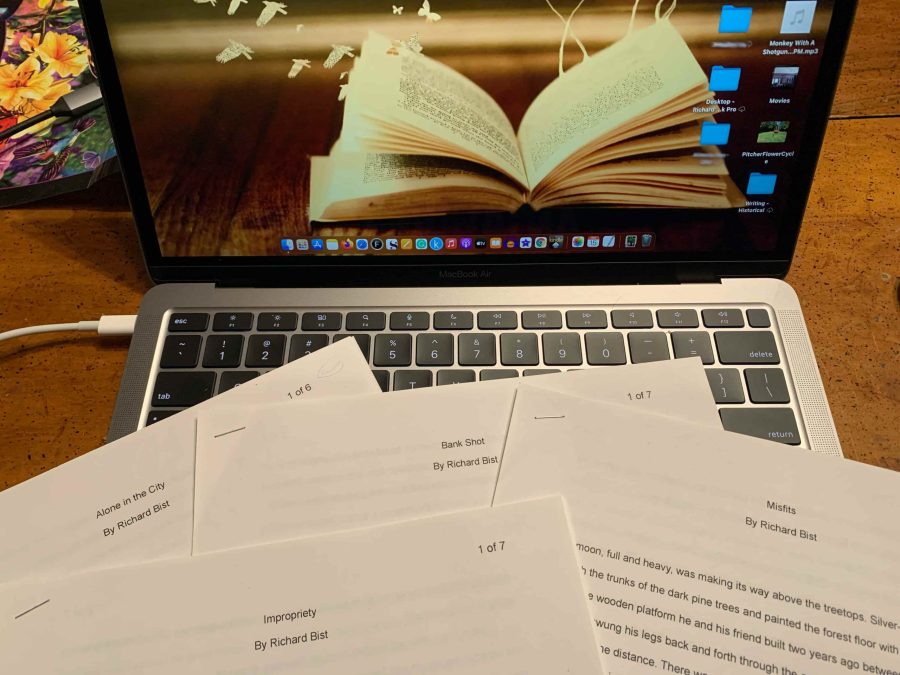
I have a love/hate relationship with first drafts. I call it my first draft dilemma. On one hand, I love writing a first draft. The idea for the story is fresh in my mind. I’m going along for a ride to see where it takes me. Usually, I don’t even know what the ending is going to be, so it’s sort of like reading a book for the first time. It’s exciting.
On the other hand, well, first drafts are incredibly frustrating. There’s the uncertainty. Is this idea I have a viable story or a dead end? Will it be interesting? Will anyone want to read it? Is it worth my time and energy?
Writer problems. The juxtaposition of excitement and trepidation. 
If you’re like me, the other issue with a first draft is trying to capture what I see in my imagination and transfer it to the keyboard. I never quite seem to get that scene just right or describe that setting just the way I picture it in my head. I think all fiction writers struggle with this. The best we can get is a close approximation.
What it all boils down to is trying to make the first draft perfect. It shouldn’t be. It can’t be. The first draft – I constantly remind myself – is just to get the basic idea on the page. That’s all. Throw it all on there, go overboard, toss in every little piece of information possible, and then, later on, sort it out and edit it down.
Trying to get it right the first time presents two problems. First, the constant editing and tweaking as I go along slows the creative process to a snail’s pace. I like to have momentum when I write, to get into a zone and let my fingers fly. Stopping at the end of every sentence or two for editing drives me mad.
Second, I think it makes it easy to lose sight of the goal. Editing as I write gets me too focused on a specific moment of the story and I lose sight of the big picture. Again, I find it better to throw everything on the page like an explosion of words and ideas, then go back and tidy it up.
I also don’t like to outline my stories. I prefer to start with an idea and see where it leads me. Usually, it’s the protagonist that takes me by the hand and guides me through the story. I’m merely along for the ride, an observer. I prefer it that way. I want to be surprised just as I want my readers to be. Many times my stories come from dreams I’ve had, but even then, they aren’t full stories. There are blanks that need to be filled in.
 It may not be the most efficient way to write a piece of fiction, but for short stories it seems to work for me. My novel, on the other hand, was outlined. Not in great detail, but I sketched out what I wanted to happen in each chapter. That gave me something to write around and kept me on track.
I also keep this quote from one of my favorite authors handy:
“The first draft of anything is shit.” — Ernest Hemingway
It’s a reminder to keep calm and keep writing.
RB
I start with an idea that just begins to develop, or go in a different direction, as I write. I also do not know how it will end, until I get there. 😄 I only write short stories, which is easer than a book.
Same here. I like the story to lead me. Makes the process far more interesting. 🙂
Thanks for the comment!
One of the only advantages that I can think of to being a lyric poet is that the only way to write that stuff successfully is to channel it verbatim from entities smart enough to actually make it work. Rhyme and meter come out so flawless in this fashion (in about the time it takes to write a fair copy) that not only is editing undesirable, it’s pretty near impossible!
I do pay a price similarly tortuous to that of common editing in my seeming total inability to both do this and relate normally to my fellow human beings, though ~ so, “six of one and half a dozen of the other,” I guess…
I think every type of writing – prose, poetry, essay, etc – has its own positives and negatives. We just have to find the one that works best for us.
Thanks for the reply!
👌
Good luck with your revisions.
Thanks…seems the revision process never ends!